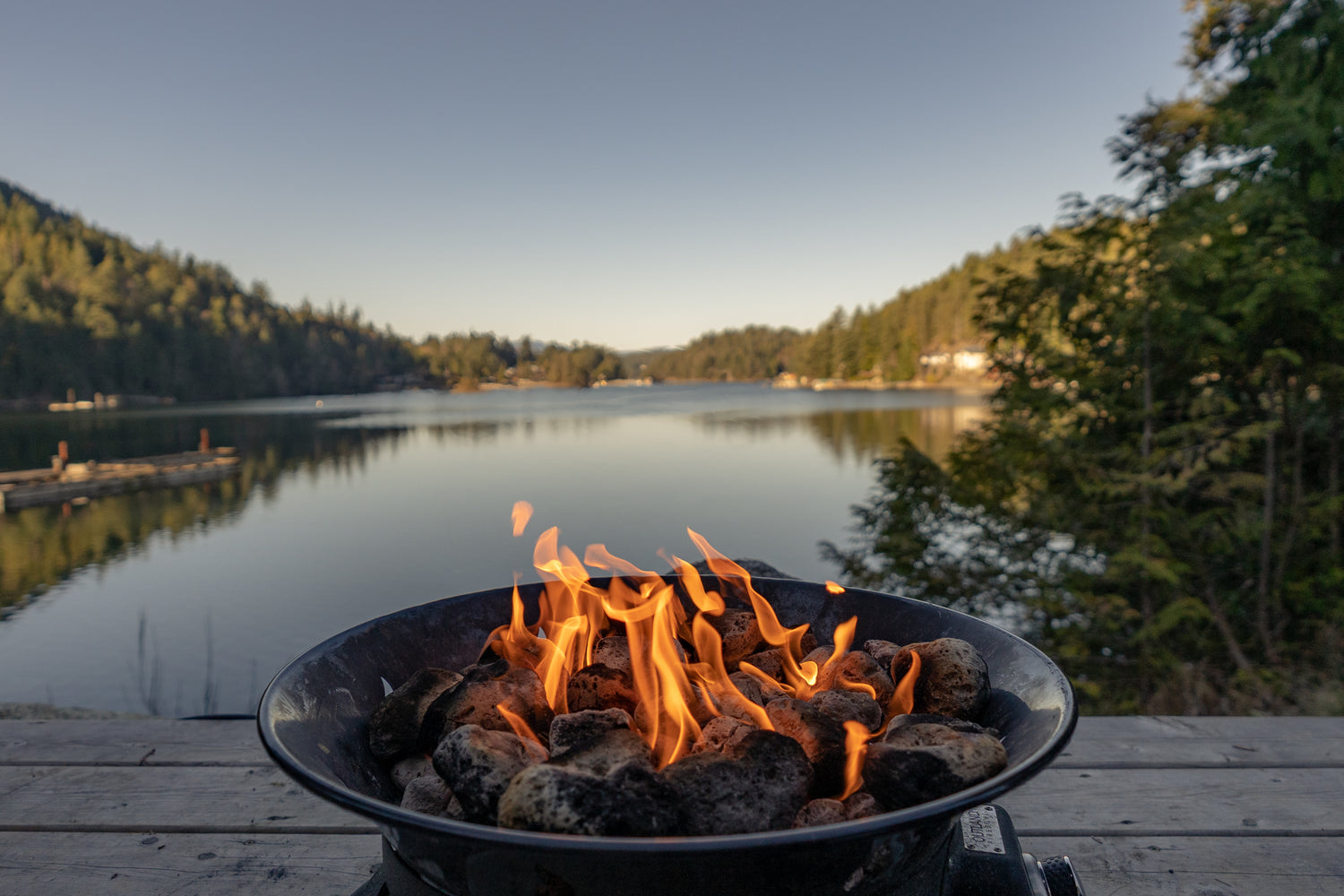
The short answer: for a UK garden in 2026, Corten steel is the best all-round fire pit material. It weathers naturally to a protective rust patina and, in our experience, typically lasts 20 to 30 years with minimal upkeep in a UK garden. Cast aluminium is the strongest runner-up for owners who want a fixed look year to year. For balconies and tight courtyards, choose bioethanol.
The single most important question to ask when buying a fire pit in the UK is how it ages. The British climate puts most of a fire pit's life outside: rain, frost, sun and salt-laden air in coastal regions all do their work between fires. The right material does not fight that exposure; it accommodates it.
In May 2026, the materials worth considering for a UK garden fire pit are: Corten steel, stainless steel, cast iron, cast aluminium, ceramic or clay, and cement-based composites. Each ages differently, suits a different garden, and asks for a different level of maintenance.
Corten steel: the weathered look that lasts decades
Corten, also known as weathering steel, is an alloy of iron, copper, phosphorus, silicon, nickel and chromium engineered to develop a stable rust-coloured oxide layer over the first 6 to 12 months. That layer is the point. Once formed, it protects the steel beneath from further corrosion, and the piece keeps its weathered patina for 20 to 30 years.
For UK gardens, Corten is the most considered choice. The BonFeu BonBowl Plus and Adezz Halo are both built in 3mm Corten or steel and develop their character over time.

The trade-off: the rust transition period looks alarming if you have not been warned. Year one is uneven and patchy. Year two settles into the deep orange-brown most people associate with the material. We tell every Corten customer this before the piece ships.
Stainless steel: clean lines, low maintenance
Stainless steel keeps its appearance year to year. No patina, no transition, no maintenance beyond a wipe. For contemporary gardens where the design intent is consistency, stainless is the right answer.
Stainless costs more per gauge than mild steel and notably more than Corten in equivalent thicknesses. The premium is for the finish, not for added durability.
Cast iron: heritage and heat retention
Cast iron fire pits are roughly 3 times heavier per litre than cast aluminium at equivalent dimensions, and 2 to 3 times heavier than 3mm Corten. That mass is the feature: cast iron retains heat well after the fire has burned down, throwing residual warmth for 1 to 2 hours longer than thinner-walled materials.
The maintenance ask is greater. Cast iron rusts if left untreated; a coat of high-temperature stove paint each spring is the standard care. Stored properly under a cover, a maintained cast iron pit gives 20 to 30 years of service.
Cast iron suits traditional gardens and country properties. It is heavy, which is a feature for permanence and a drawback for repositioning.
Cast aluminium: lightweight and rust-proof
Cast aluminium is corrosion-resistant from day one, weighs roughly one third as much as cast iron at the same size, and never needs coating. It is significantly lighter than cast iron at equivalent dimensions, which makes it easier to move around but also less effective at retaining heat after the fire dies.
The Adezz Brann Rectangular Fire Table is available in cast aluminium for owners who want the gas-fired convenience of an outdoor fire table without the Corten weathering process.

Ceramic and clay: the traditional choice
Ceramic and clay are the traditional fire pit materials, with a history that runs through Mexican chimineas and Mediterranean braziers. They retain heat well, look beautiful, and develop a warm patina with use.
The drawback is fragility. A ceramic or clay piece cannot tolerate sustained extreme heat: fires should be kept moderate, and the material is at risk in frost if water gets inside the body during winter. A cover and an indoor storage option for the coldest months are part of the cost of ownership.
For chimineas in particular, ceramic and clay still lead the field. For open fire pits in the UK climate, modern materials usually serve owners better.
Concrete and MGO composite: modern and durable
MGO, magnesium oxide composite, is the material behind several premium contemporary fire pits. It imitates the look of concrete or weathered timber at a fraction of the weight, while being UV-stable, frost-resistant and rust-proof.
The Lifestyle Calida MGO Firepit is the example we know best. Year-round outdoor use, no winter storage, no rust to manage.

Cement and cast stone variants belong in the same category for ageing characteristics but are 2 to 3 times heavier than MGO at the same dimensions. For statement architectural pieces, cement is unmatched: the GlammFire Zarzuela is the upper end of this segment.

What we recommend for the British climate
For most owners in most UK gardens, Corten steel is the right balance of cost, longevity and design character. It handles British weather without intervention, develops a distinctive look across the first year, and lasts decades.
For balconies and small courtyards, bioethanol takes the materials question off the table: the housing is stainless or lacquered steel, the flame is smokeless, and there is no ember risk.
For owners commissioning a statement piece, cement or MGO opens up sculptural possibilities that no metal can match.
For traditional gardens that suit a chiminea silhouette, ceramic or clay remains the strongest aesthetic choice, accepted as a piece that needs winter cover.
Featured in this guide

What our customers can expect
Every fire pit we supply at Fireside Boutique is sourced from a named European manufacturer with verifiable production credentials: Adezz in the Netherlands, BonFeu in Belgium, GlammFire in Portugal, and Lifestyle and HEAT here in the UK. Each piece carries the manufacturer's structural warranty, which we honour and administer on your behalf.
Indicative cover by material: Corten and steel pieces , 5-year structural guarantee; cast aluminium fire tables , 5-year guarantee against corrosion; cement and MGO statement pieces , 2-year guarantee against frost cracking; cast iron , 3-year guarantee with annual stove-paint maintenance documented. Cosmetic patina is never a defect. Warping under intense heat is.
We have handled every material category on this list. We deliver across the UK from a single warehouse and field follow-up questions from customers in November about pieces they bought in May. If the warranty matters to you, name it before you buy , we will tell you exactly what is and is not covered.
Frequently asked questions
What is the most weatherproof fire pit material?
Corten steel and cast aluminium are the two most weatherproof choices for the British climate. Both can be left outside year-round without maintenance. Corten develops a protective rust patina; cast aluminium is corrosion-resistant from day one.
Does Corten steel really rust?
Yes, deliberately. Corten steel is engineered to form a stable rust-coloured oxide layer across the first 6 to 12 months. That oxide layer is what protects the steel beneath from deeper corrosion. The visible rust is the feature, not a defect.
Can ceramic fire pits be left outside in winter?
Not safely without a cover. Ceramic and clay are at risk in frost: any water trapped in cracks or in the body of the piece can expand and split the material. A cover, or moving the piece into a shed for the coldest months, is recommended.
What is the most eco-friendly fire pit material?
Bioethanol fire features are the lowest-impact choice. They burn a renewable plant-based fuel, produce no smoke or ash, and a single 2L tank delivers 4 to 6 hours of clean flame. For wood-burning pits, longevity is the key environmental factor: a Corten steel pit that lasts 30 years is significantly more sustainable than 3 mild-steel pits replaced every 10 years.
Last updated: May 2026 by the Fireside Boutique team. We supply fire pits, outdoor fireplaces and outdoor cooking equipment to gardens across the UK.