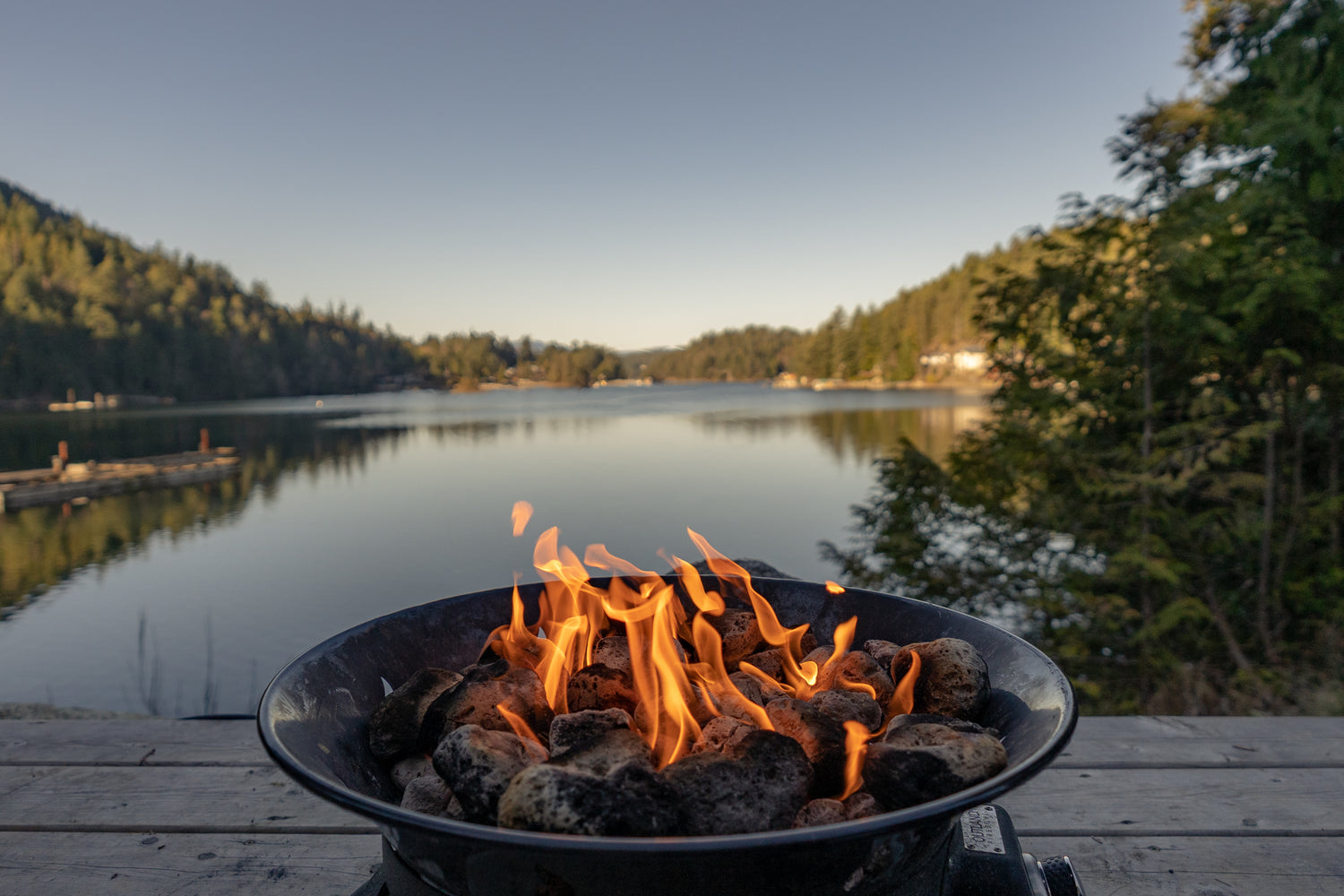
The best bioethanol fire pit for a UK garden in 2026 depends on two things: where you want to use it, and what kind of buyer you are. For an artisanal outdoor statement piece, our pick is the Glamm Fire Lira at £3,800. For an automatic remote-controlled indoor fireplace, it is the Planika Bubble at £1,350. These two brands sit at opposite ends of the bioethanol market: Glamm Fire is handmade in Portugal for buyers commissioning a once-in-a-decade piece, Planika is Polish engineered automatic-tech for a clean indoor installation. They are not direct alternatives. We cover honest mid-range options further down for buyers between the two.
This guide walks the bioethanol case honestly: how the fuel works, where it genuinely beats wood, what an evening actually costs, and which pieces in the UK market earn their place. We deliver bioethanol fire features to customers across the UK, and the recommendations below come from seeing how each one actually performs.
How a bioethanol fire pit actually works
Bioethanol is a denatured alcohol distilled from plant matter (typically corn or sugar cane) that burns cleanly to produce heat, water vapour and a small amount of carbon dioxide. There is no smoke, no soot and no ash. The flame is real, visible and warm, but smaller and quieter than a wood fire of equivalent size.
A bioethanol fire pit has a sealed metal burner reservoir that holds the fuel, a lighting port at the top, and an extinguisher slide that smothers the flame to put it out. There is no chimney, no flue and no gas line. You decant fuel from a 5-litre or 10-litre jerry can into the burner, light it with a long match or a piezo igniter, and the flame burns until the reservoir is empty or you close the slide.
When bioethanol genuinely beats wood
Bioethanol is the right answer in three specific situations, and the wrong answer in most others. The right situations are balconies, smoke-control areas and indoor-outdoor pieces.
On a balcony, wood is impractical (no flue, neighbours below, smoke considerations). Bioethanol gives you a real flame with none of those concerns. In a UK smoke-control area (most urban postcodes), open wood fires are restricted; bioethanol burns clean enough to be legal and considerate. And for an indoor-outdoor piece (a glazed garden room, an open-fronted loggia, an enclosed terrace), bioethanol is the only flame you can run inside without a flue or gas connection.
Wood remains the better choice in a typical open garden. Bioethanol gives you maybe a quarter of the heat output of a wood fire pit of similar size, the fuel is more expensive per evening, and the visual flame is gentler. If your patio has the space and the air, wood usually wins.
Burn time and fuel cost: the real number per evening
A typical bioethanol burner holds 1.5 to 2.5 litres of fuel. At full output, a 2-litre tank burns for around four to six hours. Quality bioethanol fuel costs roughly £4 to £6 per litre in the UK in 2026, which works out to £8 to £15 of fuel per evening for a four to six-hour burn. Larger burners (the 3-litre and 5-litre reservoirs on premium pieces) push the per-evening cost higher.
Compare that to a wood fire: the wood for a four-hour fire in a typical bowl costs perhaps £3 to £5 in seasoned hardwood. So bioethanol is two to three times more expensive per evening on fuel alone. Where the maths comes out in bioethanol's favour: no kindling, no ash to clear, no firewood store taking up garden space, and no time lost waiting for the fire to catch.
Best premium bioethanol fire pits 2026: the Glamm Fire range
The artisan end of the bioethanol market in the UK is dominated by Glamm Fire, a Portuguese workshop that hand-builds each piece. The range is for buyers commissioning a piece they intend to keep for two decades. Expect prices from £3,800 up to £12,500.
For an intimate outdoor sculptural piece, the Glamm Fire Lira at £3,800 is our pick. Inspired by an ancient coin, sized for an intimate seating arrangement. Two armchairs, a low table and the Lira at the centre is a serious evening for two.
For a larger statement piece, the Glamm Fire Operetta at £8,200 and the Glamm Fire Circus at £11,300 both ship with integrated seating that tucks around the central bowl. The Circus is a serious anchor for a garden room you have been planning for years.
For the fire-table format, the GlammFire Cosmo 13 at £8,550 is the premium pick. A 130cm bioethanol fire table that does double duty as a serious garden table and a real flame at the centre of the evening.
What about mid-range bioethanol? Brands worth knowing
We do not stock the mid-range tier of the bioethanol market in 2026 (roughly £600 to £2,500), but the question comes up often enough that an honest guide should name the brands worth considering. Two are worth knowing.
EcoSmart Fire (Australian, distributed globally) is the most visible mid-range bioethanol brand in the UK. Their range covers automatic indoor fireplaces, freestanding outdoor pieces and integrated burners for installation. Build quality is good and the brand has a serious dealer network. Look at the Pop 3 and Mini T for the entry tier.
Bio-Blaze (Belgian) sits in a similar price band with a stronger focus on freestanding indoor pieces and decorative pillars. Their workmanship is honest, and the range includes a number of pieces below £1,000 that would suit a smaller flat or a covered terrace.
If you want an artisanal piece you will keep for twenty years, look at Glamm Fire. If you want a clean automatic indoor installation with remote control, look at Planika. If you sit between those two and want a competent mid-range piece, look at EcoSmart Fire or Bio-Blaze.
Best automatic bioethanol fireplaces 2026: the Planika range
For a glazed garden room or an indoor installation, Planika's automatic bioethanol fireplaces are the considered choice. Planika sits at the mass-market premium end: Polish-engineered, remote controlled, sealed-burner safety, with a network of resellers across the UK. The Planika Bubble at £1,350 is the entry to their automatic range: remote-controlled, with a sealed burner and safety sensors that handle the indoor case. The Planika Arcticon at £1,830 steps up to a fully automatic Polish-built fireplace, available in black or white, with serious build quality across a decade of use.
Safety: ventilation, refilling and where you can use them
Bioethanol burns cleanly, but it does consume oxygen and produce a small amount of CO2 and water vapour. For indoor or enclosed-room use, you need ventilation (a cracked window or a vented room is usually enough; check the piece's specifications). Never refill a hot burner. Always wait for the burner to cool fully (typically 30 minutes minimum) before topping up. Store fuel away from heat sources and out of children's reach.
For outdoor use, place the fire pit on a stable non-combustible surface (paving, stone, gravel). Keep a respectful distance from combustibles, soft furnishings and overhead cover.
Featured in this guide


Frequently asked questions
Is bioethanol fire pit smoke-free?
Yes. Bioethanol burns to produce heat, water vapour and a small amount of CO2. There is no smoke and no soot, which makes it the only flame option for many UK balconies and smoke-control areas.
How long does a bioethanol fire pit burn?
A 2-litre burner runs for around four to six hours at full output. Premium pieces with 3-litre or 5-litre reservoirs burn longer.
Can you use a bioethanol fire pit indoors?
Some of them. Planika's automatic indoor range (Bubble, Arcticon) is engineered with sealed burners and safety sensors specifically for indoor use. Outdoor bioethanol fire pits should only be used outdoors or in well-ventilated covered spaces. Always check the specific piece's certification.
What does bioethanol fuel cost in the UK?
Quality denatured bioethanol fuel costs roughly £4 to £6 per litre in the UK in 2026. A four-hour evening on a typical 2-litre burner runs around £8 to £15 in fuel.
Is bioethanol more expensive than wood?
Yes, on fuel alone. Bioethanol fuel is roughly two to three times the cost per evening compared to seasoned hardwood for a fire of similar duration. Where bioethanol wins on cost: no kindling, no firewood store, no ash disposal, no waiting for the fire to catch.
Last updated: May 2026 by the Fireside Boutique team. See our full bioethanol fire pit collection for current stock and finishes.