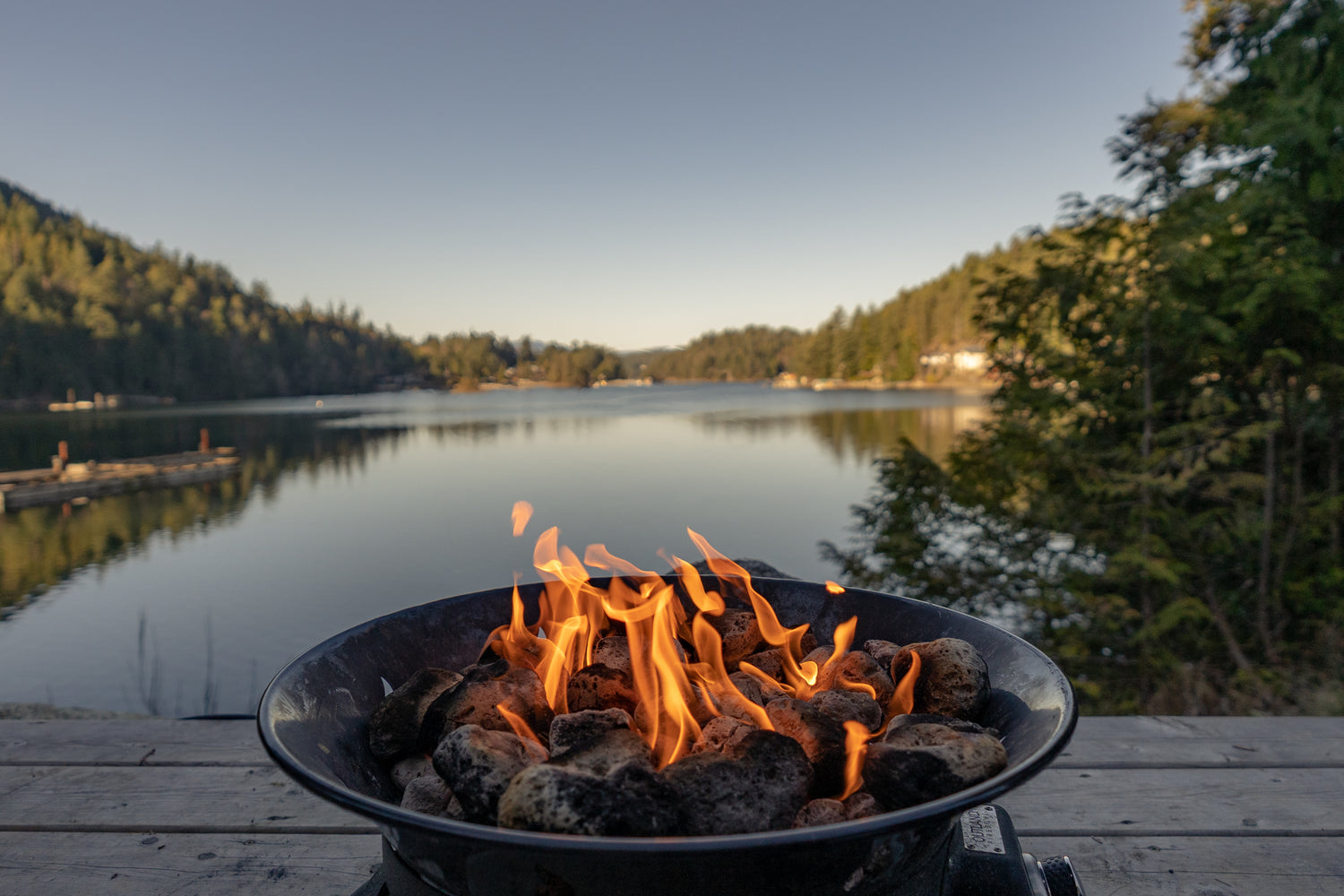
The five-minute routine is this: remove ash within 48 hours of the last fire, wipe the bowl with a dry cloth, and put a cover on. Do that consistently and most fire pits will last a decade or more in a UK garden without needing much else. The more detailed steps below cover the cases where more work is genuinely needed. Last updated: May 2026 by the Fireside Boutique team.
Removing ash: when, how and what not to do
Ash is mildly alkaline and holds moisture. Left in the bowl over several weeks, particularly over winter, it draws in rain, forms a damp paste, and accelerates corrosion from the inside out. Removing it within 24 to 48 hours of the fire going cold is the single most effective maintenance action you can take.
The safe process:
- Wait at least 24 hours after the last flame. Ash holds heat well past the point where the bowl feels cool to the touch.
- Wear gloves. Ash is fine and irritating.
- Scoop ash into a metal container, not a plastic bin or a bag. Residual heat can melt plastic.
- Dispose of fully cold ash in garden compost or via your household waste. Wood ash in small quantities is beneficial for most UK garden soils.
- Wipe the bowl dry with an old cloth before covering.
If you use a BonFeu BonBowl fire pit or similar deep-bowl design, a small metal ash scoop makes this considerably easier than improvising with a trowel.
Corten steel: why the rust colour is not a problem (and when it is)
Corten steel is designed to rust. The initial surface oxidation that forms in the first 6 to 12 months of outdoor exposure is not decay: it is the protective patina layer the material is engineered to develop. The BonFeu BonBowl Plus, for example, ships with a raw Corten finish and the warm russet-brown patina that develops over the first season is normal and intentional.
The patina seals the underlying steel from further oxidation. Once fully developed, a Corten fire pit in good condition requires almost no maintenance beyond ash removal and seasonal storage.
When rust IS a concern:
- Run-off staining on paving: in the first season before the patina fully stabilises, Corten can leave orange staining on light-coloured stone or concrete below. Stand the bowl on a purpose-made drip tray or on a surface you are not concerned about until the patina has set.
- Perforations or structural thinning: after many years, the steel around the base of the bowl where ash and moisture accumulate can thin. If you can see light through the bowl base or the metal feels soft under thumb pressure, the piece has reached the end of its structural life.
Cleaning a steel, cast iron or aluminium fire pit
Different materials need different approaches.
Painted or powder-coated steel:
- Wipe down with a damp cloth after cooling. Avoid wire brushes on coated surfaces: they strip the finish and expose bare metal.
- Light surface rust on scratched areas: rub with fine wire wool, wipe clean, and apply a thin coat of heat-resistant paint or BBQ black spray to protect the exposed metal.
Corten steel:
- No treatment needed once the patina has formed. Do not apply wax, oil or sealant to Corten: these products slow the patination process and can create an uneven finish.
- If you want to encourage the patination in dry periods, a light misting with water speeds it along.
Cast iron:
- The most vulnerable material to rust if left wet. After each fire, dry thoroughly with a cloth and apply a thin layer of vegetable oil or a purpose-made cast iron conditioner.
- If surface rust has already formed, use a wire brush to remove loose flakes, then oil the surface.
- Never heat cast iron rapidly when cold and wet: the thermal shock can crack it.
Aluminium and stainless steel:
- Wipe with a damp cloth. Aluminium does not rust. Stainless steel may develop surface staining from heat, which wipes off cleanly with a diluted kitchen cleaner and a soft cloth.
Removing stubborn carbon build-up from the bowl
Carbon builds up inside the bowl over time, particularly around the base where embers settle. A light carbon deposit is harmless, but a thick layer retains moisture and adds unnecessary weight.
To remove it:
- Wait until the bowl is fully cold.
- Use a stiff-bristled wire brush. Avoid a wire wheel on a power tool for thinner steel bowls.
- Work in a circular motion around the bowl interior. The carbon should flake and break off with firm but controlled pressure.
- Sweep the loose material out of the bowl and dispose of it as you would ash.
- Wipe with a dry cloth.
For heavy carbon deposits that do not respond to a wire brush, a purpose-made oven and BBQ cleaner applied and left for 30 minutes will loosen the carbon enough to remove it. Rinse thoroughly and dry completely before the next fire.
Winter storage: covers, lifting feet and protecting the base
The UK winter is the hardest period for outdoor fire pits. Repeated freeze-thaw cycles, months of wet weather, and reduced use create the conditions for the most common damage.
For freestanding outdoor fireplaces and fire pit bowls alike, the priorities are:
- Always cover the bowl: a close-fitting weatherproof cover keeps rain out of the ash compartment and off the interior surfaces. Most damage starts from standing water inside the bowl.
- Raise the bowl off the ground where possible: bowls that sit directly on paving trap moisture underneath. Elevating by even 2 to 3cm on rubber feet or a small stand improves drainage and airflow significantly.
- Do not seal the bowl airtight with plastic: completely airtight covers trap moisture inside. Use a breathable cover or leave a small gap at the base for airflow.
- Empty and dry the bowl before storing for winter: if you plan to stop using the fire pit until spring, give it a thorough clean including carbon removal, dry it completely, and cover it.
Annual checklist before the first fire of the season
Before lighting the first fire of a new season, run through this brief check:
- Inspect the bowl base: check for any new perforations, significant thinning, or cracks. On cast iron pieces, look for hairline fractures around the base.
- Check the grate or ash grate if fitted: grates corrode more quickly than the bowl itself. Replace if the bars are thinning or the grate is distorted.
- Clear any debris: spiders, leaves and trapped moisture from winter storage should be cleared before heating.
- Inspect leg and foot fixings: on adjustable or multi-part designs, check that any bolted fixings are not loose and that leg welds have not cracked.
- Test the cover fit: if the cover has stretched or cracked over winter, replace it before next season.
FAQ
How often should you clean a fire pit?
Remove ash within 24 to 48 hours of each fire. A deeper clean covering carbon removal and exterior wipe-down is worthwhile every 3 to 4 uses. A full annual check should happen at the start of each season before the first fire.
Can you leave a fire pit outside all year in the UK?
Yes, if the material is suitable and it is covered. Corten and stainless steel fire pits can be left outdoors year-round with a good cover. Cast iron and painted mild steel benefit from being stored under a roof or in a shed over winter if possible.
Should you oil a Corten steel fire pit?
No. Oil and wax products slow the natural patination of Corten steel and can create an uneven finish. Leave Corten to develop its protective oxide layer naturally. Once the patina is established, it needs no further treatment.
What is the best way to remove rust from a fire pit?
For surface rust on painted or mild steel, use fine wire wool to remove flakes, clean the area, and apply heat-resistant paint or BBQ black to protect the bare metal. For Corten steel, surface rust is part of the intended finish and should not be removed. For cast iron, wire-brush loose rust and apply a light coat of cooking oil to protect the surface.
How do you stop a fire pit rusting in the UK?
Empty and dry the bowl after each fire, fit a weatherproof cover, and elevate it off the ground surface if possible. For painted steel, touch up any chips or scratches with heat-resistant paint to stop water reaching bare metal. For Corten, the patina itself is the rust protection once it has fully developed.
Featured in this guide